Backgammon is a game of luck and skill. You cannot control the dice, but you can control how you use them — and over many games, good decisions win. Here are eight beginner-friendly principles. (New to the game? Read our backgammon rules for beginners first.)
1. Learn the best opening moves
A few opening rolls have a clearly best play:
- 3-1: make your 5-point (8/5, 6/5) — the most valuable point on the board.
- 4-2: make your 4-point (8/4, 6/4).
- 6-1: make your bar point (13/7, 8/7).
- 5-3: make your 3-point (8/3, 6/3).
2. Make points, not blots
A single checker on a point is a blot and can be hit. Two or more checkers make a point that your opponent cannot land on. Early in the game, use your rolls to build points in front of your opponent’s back checkers.
3. Prioritise your 5-point and bar point
Your 5-point is the key to your home board, and your bar point (7-point) is the key to building a blockade. Owning both makes it very hard for your opponent’s back checkers to escape.
4. Build a prime
Six consecutive points form a prime — a wall that no checker can jump. Even four or five points in a row are a powerful obstacle. Build them step by step, starting from the points you already hold.
5. Count the race
Add up how far each of your checkers must travel to bear off — this is your pip count. If you are well ahead, avoid contact and run home. If you are behind, keep an anchor in your opponent’s home board and wait for a chance to hit.
6. Don’t stack too many checkers on one point
Five or six checkers piled on a single point are wasted. Spread them so they can make new points and keep your position flexible.
7. Hit when it gains a lot
Hitting sends a checker back and costs your opponent time. It is usually right to hit when it also builds your position, or when the opponent’s checker would otherwise escape — but think twice about leaving several blots of your own just to hit.
8. Bear off safely
When your opponent still has checkers on the bar or in your home board, bear off carefully: clear points from the back, keep an even number of checkers on high points, and avoid leaving single checkers exposed.
Practise on a board you love
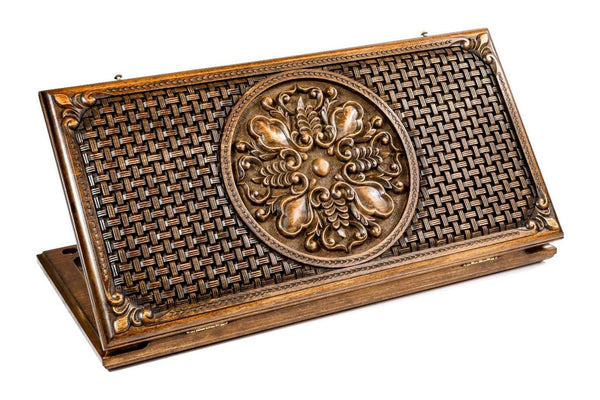
The more you play, the faster these ideas become instinct. A beautiful board makes every evening of practice a little more special — explore our handmade backgammon sets, or, if you also play long nardy, compare the two games in long nardy vs short nardy.